The casino gaming industry is a major source of revenue in the United States, as evidenced by a report released by Statista showing that, by 2022, total gross gaming revenue (GGR) from casinos in the United States reached a staggering $60 billion. Although this incentive may seem very beneficial, at its core, or in other words, in these casinos, there are a number of problems that can ruin people’s lives, damage an entity’s reputation, and even inadvertently facilitate conditions for criminals to commit crimes. This is a truth that is not limited to physical locations. In addition, virtual casinos offer the experience of gambling with the convenience of playing from home. However, even with conventional security measures and obstacles, they are also the target of fraudulent actions and a focus of adverse repercussions for players.
Nevertheless, Artificial Intelligence is a powerful and adaptable tool that has the ability to address social responsibility and the various risks associated with gambling. Through the use of AI-powered fraud detection, real-time monitoring, and natural language processing (NLP), among other technologies and methods, casinos have the opportunity to collaborate with software developers not only to prevent fraud, but also to acquire useful data for data-driven decision making and gain a competitive advantage. In addition, this technology will work effectively to assist casinos in promoting responsibility, providing effective customer service, and significantly enhancing the player experience.
Committing Bytes and Innovation
The challenges impacting the casino gaming industry have been around for a long time, but with technology and alternative distribution methods, these problems have intensified. It is crucial to preserve security and trust between the casino and players. Within established fraud detection systems, artificial intelligence can be used to accurately examine transaction patterns, player behavior, and other identifiers of atypical actions linked to fraud, providing real-time information. Additionally, through machine learning, AI can be incorporated into algorithms in these back-end systems. Historical data on player activities can be used in conjunction with up-to-date information to automatically implement preventive actions against illicit activities. This data can also be used in other valuable ways. Betting trends, gaming alternatives, and session duration are data that Artificial Intelligence studies and uses to draw conclusions about how to enhance player engagement, the gaming experience, and improve offerings. Furthermore, as customer service is also being updated and incorporating personalized chatbots, Artificial Intelligence can become the single, constant tool for all player needs and interactions.
Through natural language processing (NLP) and sophisticated algorithms, systems can alert players about excessive costs or bets. Furthermore, since Artificial Intelligence has the ability to automate, casinos can establish strict regulations on a player’s spending, the ability to automatically stop them, and even provide them with access to resources to assist them.
It is possible to say that gambling has an intrinsic “social cost,” estimated at $7 billion annually, according to the NCPG. The difficulties associated with gambling are not limited to the individual, as evidence indicates that this problem is closely linked to other areas of society, simply by being involved in a single sector.
The findings we are obtaining from the intelligent collaboration between technology software developers and casinos are not only astonishing, but crucial to addressing what has not yet been examined at the federal level. By including AI-powered fraud detection and prevention solutions, player safety, fairness, and trust will be significantly increased. Through the use of intelligent chatbots, player behavior analysis, and personalization, these methods and technologies have the potential to create more engaging and unique player experiences, ultimately boosting player support and loyalty.

Artificial Intelligence is also an effective resource for automating some of these procedures; it can even promote and achieve responsible gaming. Although federal governments have not allocated funds to research gambling addiction, it is still essential to comply with regulations. Artificial Intelligence can assist casino managers in demonstrating compliance with regulatory requirements and commitment to ethical standards.
The Future of the Winning Ticket
However, one factor that is vital to both our economy and gaming enthusiasts is often overlooked: prizes can be won through appropriate security measures, while ensuring that the fun continues. The casino gaming industry faces considerable challenges related to problem gamblers and the security risks inherent in online gambling experiences.
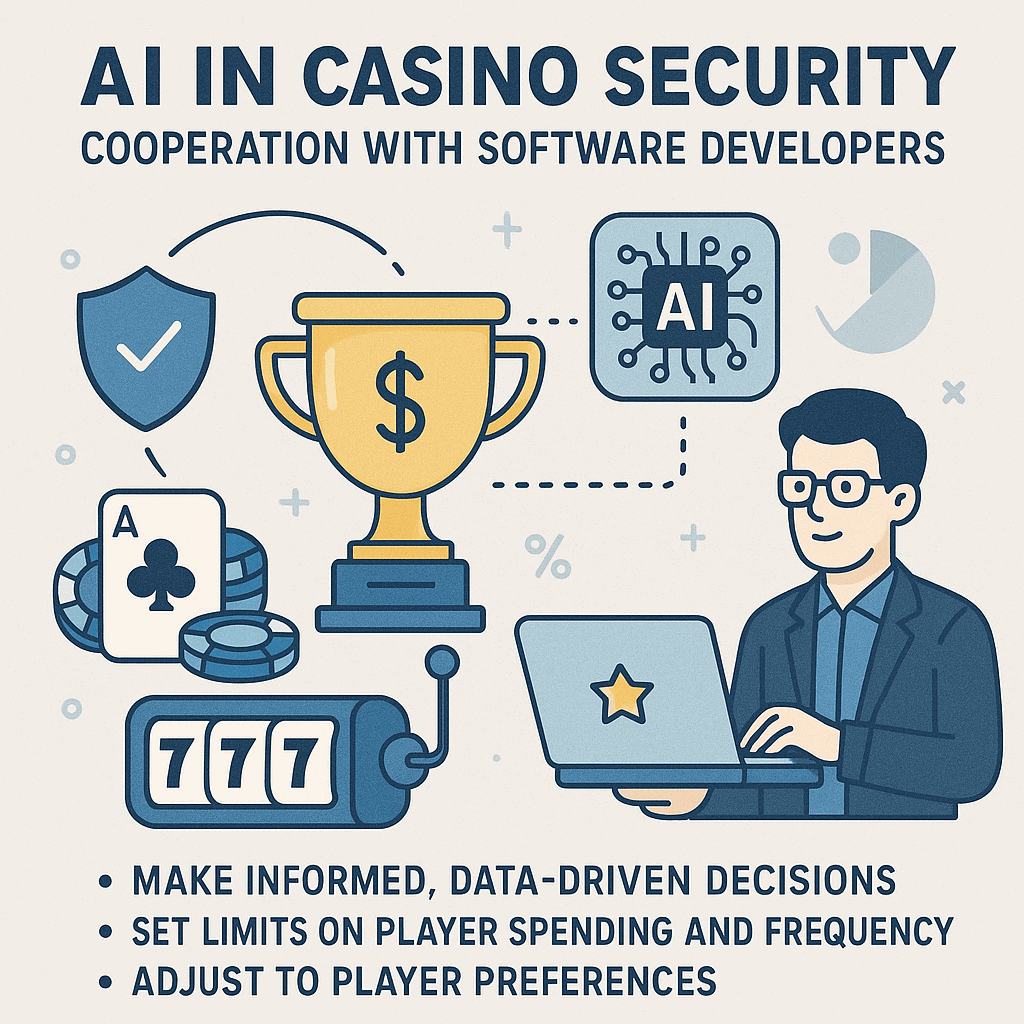
Artificial Intelligence will continue to advance, and through cooperation with experienced software developers, all types of casinos can be optimized. Whether through the ability to make informed, data-driven decisions, setting strict limits on player spending and the frequency of gambling to prevent demands or compliance issues, or by being better prepared to adjust to player preferences, casinos can save money, safeguard the survival of gaming enthusiasts, and ensure legitimate revenue.